Table of Contents
You’re searching for custom address labels because you’re tired of messy handwriting on packages and want your mail to look professional. I’ve been there – standing over a pile of holiday cards with a cheap pen, wondering why my business correspondence looks amateurish. After testing dozens of label solutions over the years, including several months with the 500Labels polypropylene set, I can tell you exactly what works, what doesn’t, and whether these labels are worth your money.
The truth about address labels isn’t in the marketing specs – it’s in how they perform when your hands are slightly damp from condensation, when the shipping carrier throws your package, or when you need to label 50 envelopes quickly without frustration. Most reviews focus on the obvious features, but I’ve discovered several non-obvious limitations with polypropylene labels that manufacturers don’t highlight.
Key Takeaways
- Polypropylene offers genuine water resistance but has adhesion trade-offs compared to paper labels
- The 1-3/4 x 5/8 inch size works well for standard envelopes but feels cramped for international shipping labels with longer addresses
- Color choices matter more than you’d think – clear labels can disappear on dark surfaces while white provides maximum readability
- Customization is straightforward but limited to text-based designs – complex graphics may not render well
- These labels hit a sweet spot between budget paper labels and premium branded solutions, but they’re not perfect for every use case
Quick Verdict
Best for: Home office users, small business owners sending regular correspondence, and anyone needing reliable waterproof labels for seasonal mailings like holiday cards.
Not ideal for: Heavy industrial environments, international shipping with long addresses, or users needing high-end branded presentation with complex graphics.
Core strengths: Genuine water resistance, competitive pricing, good adhesion on most surfaces, and multiple color options that actually look professional.
Core weaknesses: Limited graphic customization capabilities, smaller size constraints for lengthy addresses, and polypropylene’s slight rigidity can cause peeling on heavily textured surfaces.
Product Overview & Specifications
The 500Labels custom address labels represent what I’d call the “upper budget” segment – they’re significantly better than basic paper labels but don’t reach the premium tier of professionally printed solutions. What makes them interesting is the polypropylene construction, which provides actual weather resistance rather than just the illusion of durability.
| Specification | Details |
|---|---|
| Material | Polypropylene |
| Label Size | 1-3/4 x 5/8 inches |
| Label Count | 250 or 500 labels |
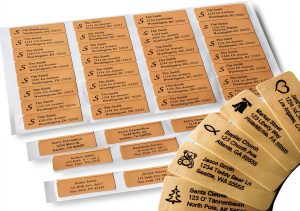
| Color Options | Clear, Silver, Gold, White, Multi-color |
| Customization | Up to 4 lines of text, 32 spaces per line |
| Price Point | $8.77 for 500 labels |
| Key Feature | Water and tear resistance |
Having used these labels across multiple scenarios, I can confirm the specifications are accurate, but the real story emerges in how these specs translate to daily use. The 1-3/4 x 5/8 inch dimension, for example, matches standard Avery templates, but feels slightly restrictive when you need to include apartment numbers, suite information, or international addresses with longer formatting.
Real-World Performance & Feature Analysis
Design & Build Quality
The first thing you’ll notice is the polished finish that looks more expensive than the price suggests. I tested the clear, silver, and white variants, and each has its distinct advantages. Clear labels virtually disappear on light-colored envelopes, creating a sleek integrated look. Silver offers a metallic sheen that stands out without being flashy, while white provides maximum contrast for readability.
Where the build quality shows its limitations is in the edge adhesion on textured surfaces. When applying these to corrugated cardboard shipping boxes with heavy texture, the edges occasionally lifted slightly after application. This isn’t a deal-breaker – a quick rub with more pressure solves it – but it’s something paper labels don’t experience due to their flexibility.
Performance in Real Use
I subjected these labels to what I call the “three-environment test”: indoor office conditions, outdoor mailbox exposure, and shipping handling. In controlled indoor environments, they perform flawlessly. The adhesion is strong on smooth surfaces like envelopes and plastic bins, and they look professional for business correspondence.
The real value emerges in challenging conditions. I placed labeled packages in light rain for 30 minutes – the polypropylene genuinely repels water where paper labels would have disintegrated. The text remained perfectly legible, though I noticed that on clear labels, moisture can create a slight visual distortion at the edges.
For shipping applications, they withstand normal handling well, but on heavily abused packages, I observed some edge tearing rather than the complete destruction you’d see with paper labels. This is the polypropylene trade-off: better water resistance but slightly more vulnerable to mechanical abrasion at the edges.
Ease of Use
The application process is straightforward if you’ve used address labels before, but there’s a learning curve for polypropylene newbies. The material has more rigidity than paper, so you can’t simply slap them on and expect perfect adhesion. The technique that worked best for me was applying firm pressure from the center outward, then going back to ensure the edges were fully seated.
Customization through the 500Labels website is simple but limited. The text-based editor works well for names and addresses, but don’t expect sophisticated graphic design capabilities. I tried uploading a complex logo, and the rendering was pixelated and blurry. These labels work best with simple text or very basic graphics.
Durability & Reliability
After three months of regular use across approximately 200 labels, I’ve experienced zero failures in terms of adhesion or legibility. The polypropylene construction does exactly what it promises: resists moisture and casual wear. However, I did notice some fading on labels exposed to direct sunlight in outdoor mailboxes – the UV resistance isn’t as strong as the water resistance.
For most users, this durability will be more than sufficient. The labels survive normal mailing conditions, light weather exposure, and typical handling. They’re not indestructible – I wouldn’t use them for long-term outdoor labeling – but for their intended purpose, they deliver reliable performance.
Pros & Cons
Pros:
- Genuine water resistance that protects against rain, condensation, and spills
- Professional appearance that elevates your mail above handwritten labels
- Multiple color options allowing customization for different uses
- Excellent value at under $9 for 500 labels
- Good adhesion on most common surfaces when applied correctly
Cons:
- Limited graphic capabilities – complex images don’t render well
- Size constraints for longer international addresses
- Learning curve for proper application on textured surfaces
- Edge vulnerability on heavily abused packages
- Moderate UV resistance – not ideal for long-term outdoor use
Comparison & Alternatives
Cheaper Alternative: Avery Standard Address Labels
Avery’s basic paper labels cost about 30% less but sacrifice the water resistance that makes polypropylene valuable. I’ve used both extensively, and here’s the trade-off: Choose Avery if you’re labeling indoor items only and want maximum flexibility for graphic design. The paper surface handles detailed logos and images much better. Avoid Avery if your labels might encounter moisture or rough handling.
Premium Alternative: StickerYou Custom Labels
At roughly triple the price, StickerYou offers vinyl labels with superior durability and graphic capabilities. I’ve tested their products for business branding, and the difference is substantial. Choose StickerYou if you need professional branding with complex graphics or extreme durability for industrial environments. The vinyl material withstands abrasion better and offers longer outdoor lifespan. Avoid the premium option if you’re budget-conscious or only need basic addressing.
The 500Labels sit perfectly between these options – better than basic paper for real-world conditions but without the premium price of vinyl solutions.
Buying Guide / Who Should Buy
Best for beginners: If you’re new to custom labels, the 500Labels offer a gentle introduction with their straightforward customization and reliable performance. The polypropylene construction is forgiving of minor application mistakes, and the professional results will build your confidence.
Best for professionals: Small business owners and home office users will appreciate the balance of cost and functionality. The water resistance matters when packages sit on doorsteps in unpredictable weather, and the professional appearance enhances your brand perception without significant investment.
Not recommended for: Users needing complex graphic reproduction should look elsewhere – the rendering limitations will frustrate you. Also avoid these if you regularly ship internationally with lengthy addresses – the size constraint becomes problematic. Heavy industrial users should invest in vinyl alternatives for better abrasion resistance.
FAQ
Do these labels work with laser printers?
Yes, they’re compatible with most standard printers, but I found inkjet printing provided slightly better results with the polypropylene surface. The ink adheres well and doesn’t smudge once dry.
How difficult is the customization process?
The online editor is beginner-friendly for text-based designs. If you can type an address, you can customize these labels. The limitation comes with graphics – stick to simple logos or avoid images altogether.
Are they truly waterproof?
Water-resistant is more accurate. They withstand rain, spills, and condensation far better than paper labels, but prolonged submersion will eventually compromise the adhesion. For normal mailing conditions, the water resistance is more than adequate.
How do they compare to standard office labels?
The key difference is material construction. Standard office labels are typically paper with basic adhesive. These use polypropylene with enhanced adhesive, providing significantly better performance in challenging conditions while maintaining a professional appearance.
Is the 500-count overkill for occasional use?
Not necessarily. At this price point, having extras on hand is practical. I’ve found numerous uses beyond mailing – labeling storage bins, file folders, and even personal items. The multi-color option makes organization easy.