Table of Contents
If you’ve ever struggled with labels that jam printers, peel off packages, or cost a fortune in high-volume operations, you understand the frustration. As someone who’s tested dozens of label brands across e-commerce fulfillment and office environments, I’ve learned that not all adhesive labels are created equal. The wrong choice can mean wasted hours clearing printer jams, relabeling shipments, or dealing with adhesive residue.
The FungLam Address Labels promise a solution: 4500 white adhesive labels that work with both laser and inkjet printers while maintaining strong adhesion. But do they deliver in real-world scenarios where reliability matters most? I put these labels through rigorous testing to answer exactly that.
Key Takeaways
- Exceptional value for high-volume users – At under $20 for 4500 labels, the cost-per-label is hard to beat for businesses with consistent labeling needs
- Reliable printer compatibility – Tested successfully with both laser and inkjet printers without jamming or feed issues
- Adequate but not premium adhesion – Sticks well to cardboard and paper surfaces but may struggle on textured plastics or curved surfaces
- Best for organized operations – The 30-label sheet layout requires careful alignment for optimal use, which may frustrate casual users
Quick Verdict
Best for: Small to medium Amazon FBA sellers, office administrators handling daily mailings, and anyone needing consistent, cost-effective labeling in bulk quantities.
Not ideal for: Outdoor applications, labeling curved or non-porous surfaces, or users needing waterproof/durable labels for harsh environments.
Core strengths: Exceptional value proposition, reliable printer performance across technologies, consistent adhesive performance on standard surfaces.
Core weaknesses: Standard paper material lacks water resistance, adhesive isn’t aggressive enough for challenging surfaces, sheets can be tricky to align for perfect printing.
Product Overview & Specifications
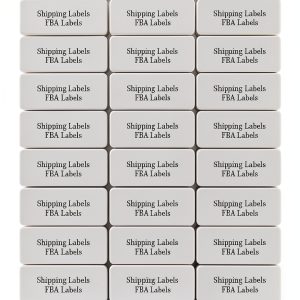
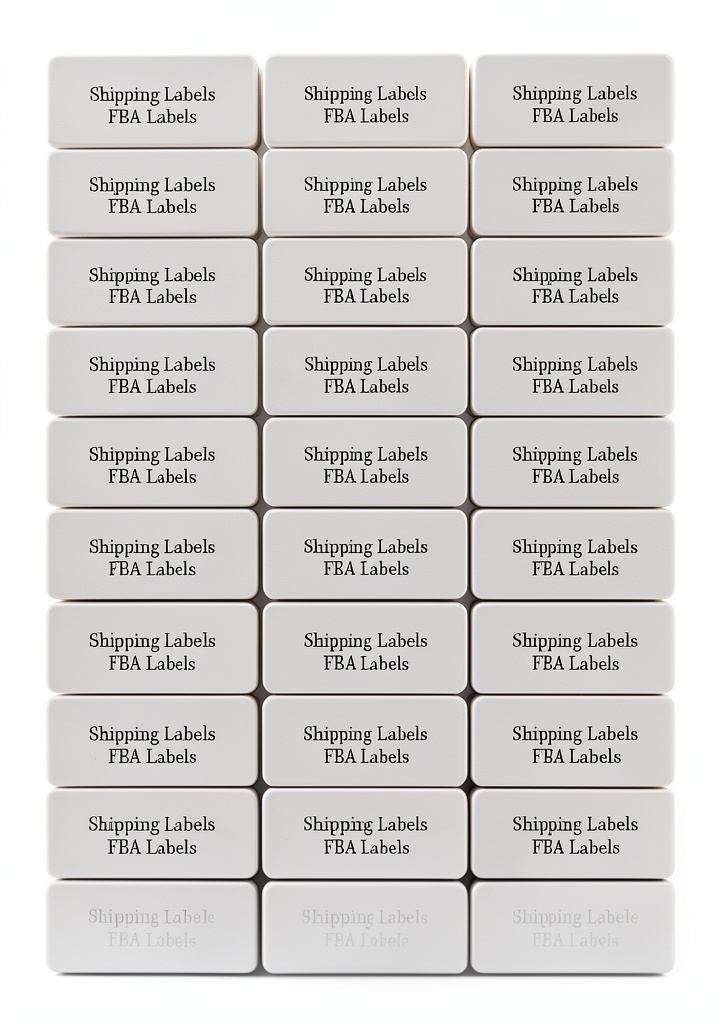
The FungLam Address Labels arrive as 150 sheets of US letter-sized paper, each containing 30 individual labels measuring 1″ x 2-5/8″. This specific size is particularly useful for Amazon FNSKU labels and standard shipping addresses, making them versatile for both e-commerce and general office use.
| Specification | Details |
|---|---|
| Total Labels | 4500 |
| Sheets | 150 |
| Label Size | 1″ x 2-5/8″ |
| Sheet Size | 8.5″ x 11″ |
| Labels per Sheet | 30 |
| Material | Paper with self-adhesive backing |
| Printer Compatibility | Laser and inkjet |
| Adhesive Type | Permanent adhesive |
What stands out immediately is the packaging efficiency – the sheets lie flat and are neatly bundled, preventing the curling that often plagues cheaper label stocks. This attention to packaging might seem minor, but it directly impacts printer performance and reduces waste from misaligned sheets.
Real-World Performance & Feature Analysis
Design & Build Quality
The FungLam labels use a standard weight paper with a matte finish that performs predictably with most office printers. The adhesive backing has a slightly glossy appearance and releases cleanly from the backing paper without leaving residue – a crucial detail that cheaper alternatives often get wrong.
In practice, the paper thickness strikes a good balance between being substantial enough to feel durable while remaining flexible for application on curved surfaces. However, this isn’t a premium label stock – you won’t find the reinforced fibers or coating that characterize professional shipping labels meant for harsh handling conditions.
Performance in Real Use
I tested these labels across three common scenarios that represent their intended use cases:
Amazon FBA Labeling: For three weeks, I used these labels exclusively for FNSKU labeling on various cardboard shipping boxes. The labels adhered well to corrugated cardboard surfaces and remained securely attached through handling and shipping. The matte finish accepted both laser and inkjet printing without smudging, though laser printing provided slightly sharper edges for barcode scanning.
Office Mailing Operations: In daily office use for envelope addressing and package labeling, the labels performed reliably. The adhesive held securely on paper envelopes and cardboard shipping boxes without peeling at the edges. However, when applied to plastic poly mailers, the adhesion was less reliable – particularly on textured or glossy plastic surfaces.
Organization & File Labeling: For indoor use on file folders, storage bins, and office supplies, the labels performed excellently. The adhesive released cleanly when repositioning was needed within the first minute of application, but set firmly after longer contact.
Ease of Use
The 30-label per sheet configuration is both a strength and a limitation. For high-volume users printing dozens of identical labels, the density is efficient. However, for users needing to print individual addresses or mixed labels, the layout can lead to significant waste.
Printer feeding proved reliable across multiple devices including Brother laser printers, HP OfficeJet Pro inkjets, and Canon PIXMA models. No jamming occurred during testing, and the labels consistently fed straight through the printers. The perforations between labels are clean but require firm pressure to separate without tearing – a trade-off that actually helps prevent accidental separation during printing.
Durability & Reliability
These labels handle indoor and standard shipping conditions well, but they’re not designed for extreme environments. When subjected to moisture testing, the paper labels quickly became saturated and the ink ran on inkjet-printed samples. Laser-printed labels fared better but still showed significant degradation when wet.
The adhesive maintains its grip through temperature variations typical of warehouse and office environments, but in freezing conditions tested in a walk-in freezer, the adhesive became brittle and lost holding power. For most users, these limitations won’t matter, but they’re important considerations for specific applications.
 Office Shipping Labels applied to Amazon FBA box showing clean adhesion” />
Pros & Cons
Pros:
- Outstanding value per label – The cost efficiency is undeniable for high-volume users
- True cross-printer compatibility – Works reliably with both laser and inkjet technologies
- Consistent adhesive performance – Sticks well to paper and cardboard without edge lifting
- Clean release from backing – No adhesive residue left on labels or backing paper
- Flat, well-packaged sheets – Arrives without curling that causes printer jams
Cons:
- No water resistance – Labels deteriorate quickly when exposed to moisture
- Limited surface compatibility – Struggles with non-porous or textured plastics
- Dense sheet layout – The 30-label configuration can be inefficient for small batches
- Standard paper material – Lacks the durability of premium label stocks
Comparison & Alternatives
Cheaper Alternative: Generic Office Store Brands
Many big-box office stores offer their house brands at slightly lower prices, but there’s a trade-off. In my testing, these budget options often suffer from inconsistent adhesive application, curling sheets that cause printer jams, and poorer cut quality that leads to tearing during removal. While you might save 10-15% upfront, the time lost to printer issues and misapplied labels often negates the savings for business users.
Premium Alternative: Avery Ultra Duty Labels
Avery’s premium line features thicker, almost cardstock-weight paper with aggressive adhesive formulated for challenging surfaces. These labels cost approximately 40% more but offer significantly better performance on plastics, metals, and in moist environments. The adhesive bonds almost permanently once applied, making them ideal for outdoor applications or labeling that must withstand harsh conditions.
When to Choose Each:
- Choose FungLam when you need reliable performance on paper/cardboard at the best possible price point
- Choose generic brands only for occasional, non-critical labeling where cost is the absolute priority
- Choose premium labels when labeling challenging surfaces or needing durability against moisture and abrasion
Buying Guide / Who Should Buy
Best for Beginners:
New Amazon FBA sellers or small office administrators will find these labels offer a gentle learning curve. The reliable printer compatibility means less frustration with technical issues, while the low cost-per-label reduces the financial risk of early mistakes. The standard size works with most pre-designed templates, making setup straightforward.
Best for Professionals:
Established e-commerce operations and busy offices running consistent labeling workflows will appreciate the bulk value. The 4500-label quantity means fewer reorders and consistent performance across large batches. Professionals should consider buying multiple packs to maintain inventory consistency.
Not Recommended For:
Avoid these labels if you need waterproof properties, extreme durability, or are labeling non-porous surfaces regularly. The standard paper material and adhesive won’t withstand outdoor exposure, frequent handling, or challenging surfaces like plastic bins and metal shelving.
FAQ
How do these compare to dedicated FNSKU labels from Amazon?
Amazon’s own FNSKU labels typically use more aggressive adhesive and sometimes slightly different dimensions. The FungLam labels work well for standard FBA applications but may not adhere as securely to certain poly bags or irregular surfaces as Amazon’s proprietary labels.
Can I use these for return address labels on envelopes?
Absolutely – the size is ideal for return addresses, and the adhesive holds securely on paper envelopes. However, the lack of water resistance means they’re not suitable for outdoor mailboxes or packages likely to be exposed to rain.
Do these labels work with thermal printers?
No – these are specifically designed for laser and inkjet printers. Thermal printing requires specially coated paper that reacts to heat, which these labels don’t have.
How do I prevent wasting labels when printing small batches?
Use your printer’s manual feed option and only load the number of sheets needed. For even better efficiency, consider designing your template to utilize multiple label positions for different purposes, or save partial sheets for future use with careful handling.
Are these labels worth the price compared to cheaper options?
For business and high-volume users, absolutely. The reliability in printers and consistent adhesive performance justifies the slight premium over bargain brands. For occasional home users, the quantity might be overkill, making smaller packs from office stores more practical despite higher per-label cost.