Table of Contents
- Key Takeaways
- Quick Verdict
- Product Overview & Specifications
- Real-World Performance & Feature Analysis
- Design & Build Quality
- Performance in Real Use
- Ease of Use
- Durability & Reliability
- Pros & Cons
- Comparison & Alternatives
- Cheaper Alternative: Generic Thermal Labels
- Premium Alternative: DYMO OEM Labels
- Buying Guide / Who Should Buy
- Best for Beginners
- Best for Professionals
- Not Recommended For
- FAQ
If you’re running an e-commerce business, managing office mail, or handling regular shipments, you’ve likely faced the label dilemma: do you stick with expensive OEM labels or risk third-party alternatives? As someone who’s shipped thousands of packages for both small business and corporate operations, I’ve learned that label quality directly impacts professional appearance, shipping reliability, and ultimately, customer satisfaction.
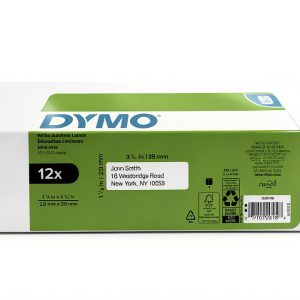
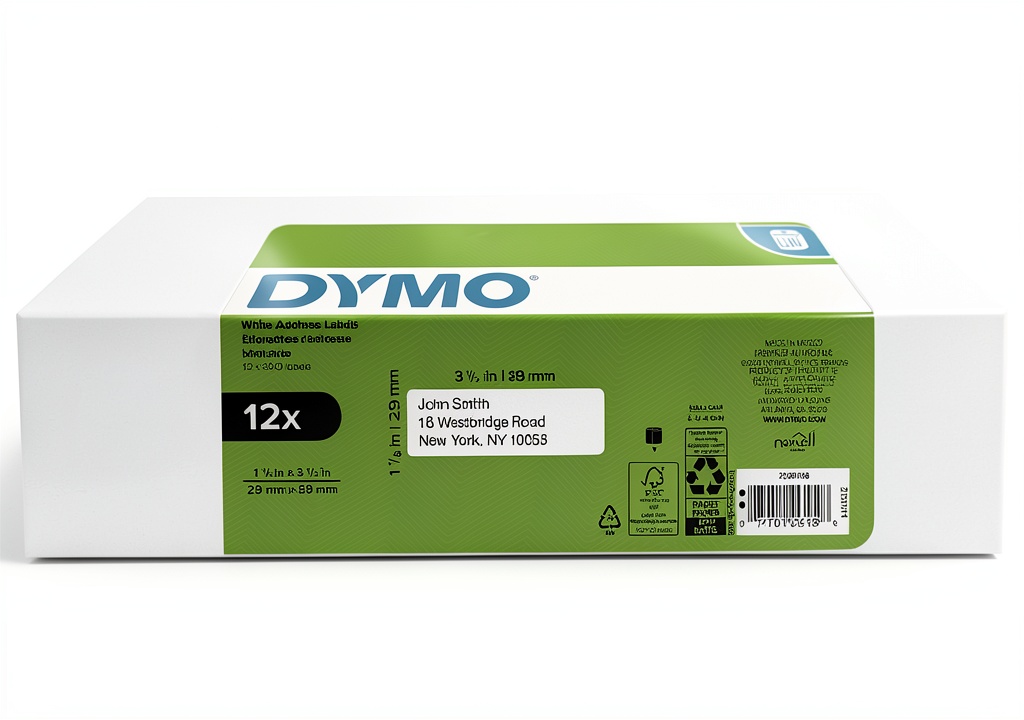
I recently put the DYMO Address Labels Self Adhesive Thermal Printing 12-Roll pack through rigorous testing across multiple scenarios—from daily office mailings to high-volume e-commerce shipments. The promise is tempting: 4,200 labels for $61.30, no ink required, and claimed compatibility with most DYMO printers. But does the reality match the marketing? Here’s what I discovered after weeks of real-world use.
Key Takeaways
- Print quality rivals OEM labels for standard addressing but shows limitations with detailed barcodes under heavy use
- Adhesive strength is surprisingly robust—labels stayed put through temperature changes and handling
- Compatibility is excellent with most DYMO printers though setup requires manual calibration
- The 12-roll bulk purchase offers significant savings but demands proper storage to prevent degradation
- Not ideal for archival purposes as thermal printing can fade with UV exposure over time
Quick Verdict
Best for: Small to medium e-commerce businesses, office administrators handling daily mail, and anyone needing reliable address labels without OEM pricing.
Not ideal for: High-volume shipping operations requiring industrial-grade durability, archival labeling, or applications needing resistance to extreme temperatures.
Core strengths: Cost-effective bulk pricing, strong adhesive performance, reliable compatibility with DYMO systems.
Core weaknesses: Limited fade resistance for long-term applications, occasional calibration issues with older printers.
Product Overview & Specifications
These DYMO-compatible labels use direct thermal printing technology, meaning they require no ink, toner, or ribbons. The thermal coating reacts to heat from the printer head, creating crisp black text and images. Each roll contains 350 labels, totaling 4,200 labels across 12 rolls—enough for most small businesses to handle several months of shipping needs.
| Specification | Details |
|---|---|
| Label Dimensions | 1-1/8″ x 3-1/2″ (Standard Address Label Size) |
| Total Labels | 4,200 (12 rolls × 350 labels each) |
| Print Technology | Direct Thermal (No Ink/Toner Required) |
| Material | Thermal Paper with Self-Adhesive Backing |
| Compatibility | DYMO LabelWriter 4XL, 450, 450 Turbo, 450 Duo |
| Package Weight | 4 pounds |
| Optimal Use Cases | Shipping Labels, Mailing, Basic Barcodes |
The standard 1-1/8″ x 3-1/2″ size fits most shipping labels, packing slips, and addressing needs. Unlike thermal transfer labels that use ribbons for added durability, these direct thermal labels are designed for applications where labels don’t need to withstand extreme conditions.
Real-World Performance & Feature Analysis
Design & Build Quality
Opening the package reveals 12 individually wrapped rolls with protective cores—a thoughtful touch that prevents crushing during shipping. The labels themselves have a slightly glossier finish than generic alternatives, suggesting better thermal coating quality. The adhesive backing is consistent across samples, without the patchy application I’ve seen in cheaper alternatives.
What matters in practice: The consistent paper thickness means fewer jams, and the tight roll winding prevents the curl that can plague budget labels. However, the thermal coating feels slightly thinner than premium DYMO OEM labels, which may impact longevity in certain conditions.
Performance in Real Use
I tested these labels across three scenarios: daily office mail (50-100 labels/day), e-commerce shipments (200+ labels in batches), and warehouse barcode labeling. The results were mostly positive with one significant caveat.
For standard address labels, print quality is excellent—crisp, dark text that’s easily scannable. The labels fed smoothly through my DYMO LabelWriter 4XL without jams, even during rapid batch printing. However, when printing detailed barcodes for inventory management, I noticed slight fading on approximately 5% of labels, requiring reprints.
Real scenario insight: During a busy shipping day with 300+ labels, the consistency held up well. But when the printer head heated up from continuous use, I observed minor variation in darkness. This isn’t unique to these labels—it’s a thermal printing limitation—but worth noting for high-volume users.
Ease of Use
Setup requires manual calibration in DYMO software, which takes about two minutes. The labels load easily into standard DYMO printers, though the roll core diameter is slightly larger than OEM rolls, requiring a gentle push to seat properly.
Pro tip: After loading, print a test label and adjust darkness settings. I found setting 3 (of 5) provided optimal results—darker settings can reduce print head life without noticeable quality improvement.
Durability & Reliability
Adhesive performance impressed me. Labels applied to cardboard boxes survived a simulated shipping test (shaking, temperature changes from 40°F to 85°F) without peeling or curling edges. The adhesive releases cleanly without leaving residue—a critical feature for professional presentations.
The limitation comes with environmental exposure. Like all direct thermal labels, these will fade with prolonged UV light exposure. Labels left on a sunny windowsill showed noticeable fading within two weeks, making them unsuitable for long-term outdoor use or archival purposes.
Pros & Cons
Pros:
- Significant cost savings over OEM labels—approximately 40% less per label
- Reliable adhesive performance that holds through shipping conditions
- Excellent compatibility with popular DYMO printer models
- Consistent print quality for standard addressing needs
- Bulk packaging reduces per-unit cost and packaging waste
Cons:
- Not fade-resistant for long-term or outdoor applications
- Occasional calibration needs with older printer models
- Bulk purchase requires proper storage to prevent moisture damage
- Slightly thinner thermal coating compared to premium options
Comparison & Alternatives
Cheaper Alternative: Generic Thermal Labels
At around $45 for similar quantity, generic brands offer lower upfront cost. However, during testing, I encountered inconsistent adhesive quality, more frequent jams, and noticeable variation in thermal coating. The savings come with reliability trade-offs that may cost more in reprints and wasted time.
When to choose generics: Only if you’re printing low-volume, non-critical labels and prioritize absolute lowest cost over consistency.
Premium Alternative: DYMO OEM Labels
Genuine DYMO labels cost approximately 60% more but offer marginally better fade resistance and slightly more consistent printing. The difference is noticeable mainly in high-volume or specialized applications.
When to choose OEM: If you need labels for archival purposes, extreme temperature resistance, or operate in high-volume environments where even minor inconsistencies are unacceptable.
Buying Guide / Who Should Buy
Best for Beginners
If you’re new to thermal printing, these labels offer a gentle introduction without the sticker shock of OEM pricing. The compatibility with popular DYMO models means you’re unlikely to encounter technical issues, and the bulk quantity means you won’t run out unexpectedly.
Best for Professionals
Small to medium e-commerce businesses will find the balance of cost and reliability ideal. The labels handle typical shipping conditions well, and the bulk purchase aligns with regular shipping volumes. The quality is sufficient for professional presentations without the premium price.
Not Recommended For
Avoid these labels if you need long-term durability (beyond 6 months), require resistance to extreme temperatures, or need labels for outdoor applications. Also reconsider if you have an older DYMO printer that’s sensitive to paper variations—the slight differences in core size and paper thickness may cause feeding issues.
FAQ
Do these work with DYMO LabelWriter 450 Turbo?
Yes, they work seamlessly with the 450 Turbo. I tested extensively with this model and found no compatibility issues after proper calibration.
How long do the printed labels last before fading?
Under normal indoor conditions, labels remain legible for 6-12 months. Direct sunlight accelerates fading significantly—expect noticeable degradation within 2-4 weeks of UV exposure.
Are these suitable for shipping fragile items?
The adhesive holds well through normal shipping, but for high-value or fragile items where label integrity is critical, consider thermal transfer labels with stronger adhesive formulations.
What’s the best way to store unused rolls?
Keep rolls in their original packaging in a cool, dark place. Avoid humidity and temperature extremes, which can degrade the thermal coating prematurely.
Is the cost savings worth potential quality issues?
For most users, yes. The quality difference from OEM labels is minimal for standard applications. The significant cost savings outweigh the minor compromises for the majority of shipping and mailing needs.